For a long time, renewable energy stories followed a familiar script.
Solar is cheaper. Wind is expanding. Batteries are coming. Governments announce targets. Companies promise net zero by some distant year. Everyone nods and moves on.
Lately, though, the conversation has changed. Not because renewables are failing. Quite the opposite. They’re starting to run into the kinds of problems that only show up when something actually works at scale.
That’s where things get interesting.
The good news is obvious. The friction is not.
Across much of the world, renewable energy keeps breaking records. More solar capacity is being installed each year than any other power source. Wind projects continue to grow, both on land and offshore. Costs, while no longer dropping as fast as before, are still far below what they were a decade ago.
In some regions, renewables now supply a meaningful share of daily electricity demand. Not symbolic levels. Real numbers.
That matters because it shifts the conversation from “can this work” to “how do we make this reliable.”
And those are very different questions.
Grids weren’t built for this much clean power
One of the biggest challenges facing renewable energy right now has nothing to do with technology.
It’s the grid.
Most electricity grids were designed around centralized power plants that produce steady output. Coal, gas, nuclear. Power goes one direction. Demand rises, supply follows.
Renewables don’t behave like that. Solar peaks at midday. Wind depends on weather. Sometimes there’s too much power. Sometimes not enough.
Early signs suggest grid operators are struggling to adapt quickly enough. In some areas, clean energy is being curtailed, basically wasted, because the grid cannot move it where it needs to go.
That’s a strange problem to have. And a very real one.
Storage is improving, but not evenly
Battery storage is often presented as the missing puzzle piece. And to be fair, it’s getting better.
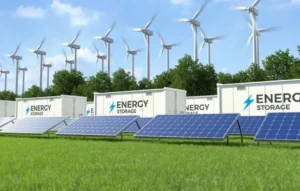
Large-scale battery projects are becoming more common. They smooth out short-term fluctuations and help keep the lights on during peak demand. Prices have come down, though not without some recent volatility tied to supply chains.
But storage is still expensive at the scale needed to cover days or weeks of low renewable output. Long-duration storage remains an open question.
Some solutions are promising. Others are still experimental. None are universally deployable yet.
This is where optimism needs a reality check.
Sustainability is moving beyond electricity
Another quiet shift is happening in how sustainability is defined.
For years, renewable energy mostly meant power generation. Now the focus is expanding. Heat. Transportation. Industry. Agriculture.
Electric vehicles are part of this story, but they are not the whole thing. Heavy industry, shipping, and aviation are harder to decarbonize. Solutions here may include green hydrogen, synthetic fuels, or entirely new processes.
These sectors move slowly. Infrastructure lasts decades. Change is possible, but it’s not fast.
That doesn’t mean progress isn’t happening. It just means timelines are longer than political slogans suggest.
Corporate climate promises are under more scrutiny
Companies are still making sustainability pledges. Lots of them.
But the tone has shifted. Investors, regulators, and the public are asking tougher questions. How exactly will emissions be reduced. What counts as real progress versus accounting tricks.
Renewable energy procurement plays a role here, but it’s no longer enough to buy credits and call it a day. There’s growing pressure to demonstrate additionality, meaning the clean energy would not exist without that commitment.
This part matters more than it sounds.
Because credibility, once lost, is hard to regain.
Developing regions face a different set of trade-offs
In wealthier countries, the renewable debate often centers on optimization. Grid upgrades. Market design. Storage incentives.
In developing regions, the conversation looks different.
For many communities, renewables are less about climate targets and more about access. Off-grid solar, microgrids, and distributed systems are bringing electricity to places that never had it reliably before.
That’s a real win. But it also comes with challenges around maintenance, financing, and long-term viability.
Sustainability here is as much about social systems as it is about technology.
Policy is trying to catch up
Governments are responding, but unevenly.
Some are investing heavily in grid modernization and clean energy incentives. Others are pulling back, worried about costs or political backlash. Policy changes can unlock projects or freeze them overnight.
That uncertainty makes planning harder. Especially for large infrastructure investments that need stable rules over many years.
Renewable energy thrives on consistency. It struggles with whiplash.
What comes next is less flashy, but more important
The next phase of renewable energy won’t be defined by record-breaking installations or eye-catching announcements.
It will be defined by integration. By whether grids can adapt. By whether storage scales. By whether sustainability claims hold up under scrutiny.
Progress will likely feel slower. More technical. More bureaucratic.
That’s not a bad sign.
It suggests renewable energy is moving out of the hype phase and into the hard work of becoming the backbone of modern economies.
And if that sounds less exciting than the early days, it’s worth remembering something.
The most important technologies rarely stay exciting forever. They just become essential.