It was probably inevitable, but it still feels like a moment worth pausing on.
OpenAI has begun offering advertising placements inside its chatbot products, marking a shift in how one of the most widely used AI tools plans to make money at scale. For users, this is the first real sign that the era of ad free AI conversations may be coming to an end.
The company has not framed this as a full scale rollout. More like a careful step into unfamiliar territory. Ads are being tested with select advertisers, and the placements are designed to feel “contextual” rather than intrusive. That wording matters. It suggests OpenAI knows how sensitive this move is.
Because once ads enter a chat, the relationship changes.
Ads, but not the banner kind
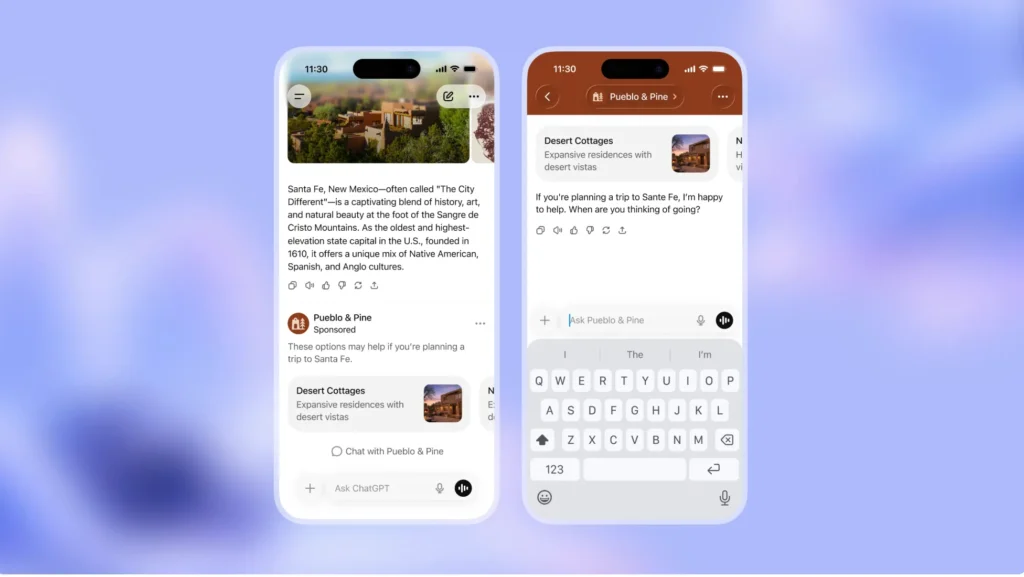
According to people familiar with the rollout, the ads are not traditional banners or pop ups. They appear as sponsored responses or recommendations that align with what a user is already asking about.
So if someone asks about the best tools for small businesses, a sponsored mention of a software product might appear, clearly labeled as an ad. That labeling part is important. OpenAI seems aware that trust is the whole game here.
This is not about shoving ads everywhere. At least not yet.
Instead, the company appears to be experimenting with how advertising can live inside a conversational interface without breaking it. That’s harder than it sounds. Chatbots feel personal. They answer questions, explain things, sometimes even help people think.
Drop the wrong ad in the middle of that and it stops feeling helpful very quickly.
Why now?
The timing is not random.
Running large language models is expensive. Really expensive. Compute costs, infrastructure, constant model updates. Subscriptions help, especially with ChatGPT Plus and enterprise plans, but ads open up a much bigger revenue pool.
Google and Meta built trillion dollar businesses on advertising. OpenAI is operating at a similar scale of attention, even if the format is different. Millions of people now start their research, planning, and problem solving inside a chatbot instead of a search engine.
That’s where things get interesting.
If people are asking an AI what to buy, where to go, or which tool to use, advertisers will want to be there. The question is whether users will accept it.
A delicate trust problem
Chatbots are not neutral in the way a list of search results feels neutral. When an AI suggests something, it can sound like advice.
That creates a trust issue that search ads never really had to solve. If a chatbot recommends a product, is it because it is genuinely useful, or because someone paid for it to appear?
OpenAI says ads will be clearly disclosed. Early tests show labels like “sponsored” or “ad” attached to responses. But disclosure alone may not be enough. Users will likely judge the system by how often ads show up and how relevant they feel.
Too many ads, or poorly matched ones, and people may start questioning every answer.
That skepticism could spread fast.
What advertisers see in this
From an advertiser’s perspective, chatbot ads are extremely attractive.
You are reaching users at the exact moment they are asking a question. Not scrolling. Not passively consuming content. Asking.
That intent is gold.
Early interest reportedly comes from software companies, online education platforms, productivity tools, and travel services. Categories where explanation matters, and where a conversational recommendation can feel natural.
This is not ideal for every brand. It works best when a product actually solves a problem someone is actively describing.
Which may limit how aggressive this channel becomes. Or maybe it just shapes who uses it.
How this could change the AI experience
For now, OpenAI is being cautious. Ads are limited. Feedback is being watched closely. The company seems aware that one wrong move could push users toward competitors offering cleaner experiences.
But it’s hard to imagine a future where AI at this scale stays completely ad free.
What may change instead is how ads behave. Less interruption, more relevance. Fewer flashy messages, more quiet nudges. Almost like a suggestion slipped into a conversation.
Whether users accept that depends on execution.
If ads genuinely help people discover useful tools, they may blend in. If they feel manipulative or repetitive, they will stand out immediately.
What happens next
This is still early. Very early.
OpenAI has not shared long term ad targets, pricing models, or how broadly this will expand. It is also unclear how ads will interact with paid subscriptions, or whether premium users will remain mostly ad free.
Regulators may also take interest, especially around transparency and influence. A chatbot recommending products carries different weight than a search result ranking.
For now, this feels like a test rather than a transformation. But tests like this tend to shape the future.
AI conversations are becoming a place where decisions happen. Money usually follows.
And once advertising finds a foothold, it rarely leaves. It just evolves.