The news broke at Davos this week and it got quite a few people in the tech and global health worlds talking.
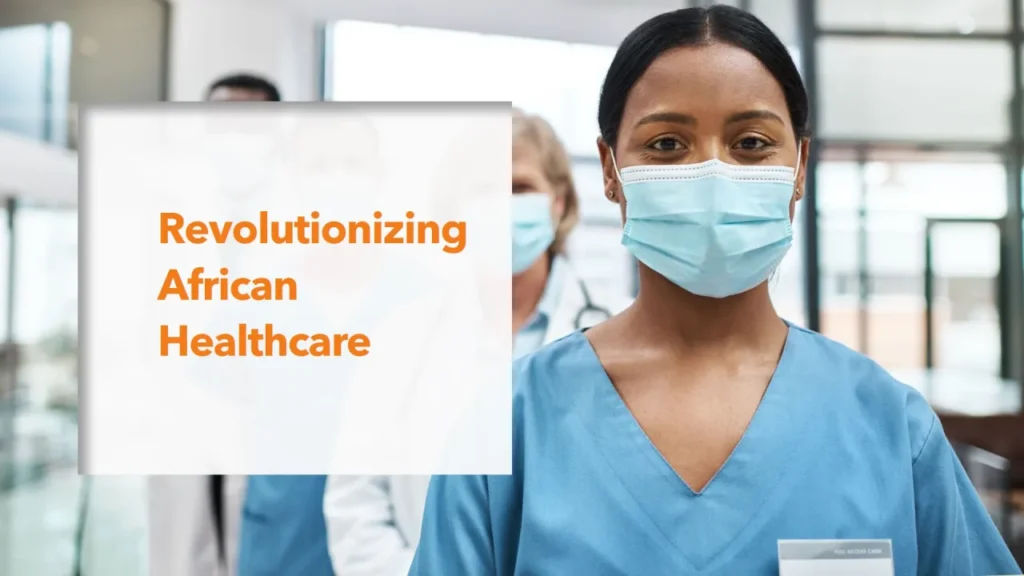
Bill & Melinda Gates Foundation and OpenAI are teaming up on a new initiative aimed at using artificial intelligence to tackle healthcare challenges in Africa. The project, called Horizon1000, comes with a roughly $50 million commitment and plans to bring AI tools into frontline health systems across the continent.
That part matters more than it sounds. We’ve seen lots of tech optimism around AI before, but this is one of the first big efforts to marry that hype with real-world health delivery in low-income settings.
What they say they want to do
At its core, Horizon1000 is about helping health clinics do more with less. In sub-Saharan Africa, there are massive shortages of trained health professionals — some estimates point to a gap of around six million workers.
AI could help fill that gap. Think tools that assist with symptom checking, triage, or clinical documentation. Officials say the idea isn’t to replace human workers, but to support them — making care more efficient and accurate where resources are thin.
Rwanda is the pilot ground. The plan is to reach 1,000 primary healthcare clinics and nearby communities by 2028, starting with that country and then expanding outward with local partners.
Bill Gates himself has talked about AI as one of the most transformative technologies ever developed, especially for places struggling with infrastructure and workforce shortages. The Foundation says it’ll work with African leaders to decide how best to apply these tools in ways that actually fit local needs.
Dream vs reality
There’s a lot to like about the idea. Clinics in rural areas often don’t have enough staff to screen patients properly. AI could potentially speed up basic health tasks, like interpreting symptoms or organizing patient records. Right now, people often wait long hours, or travel far, just for simple care.
But this is early. Really early.
For one thing, AI systems — especially the ones trained on data from rich countries — don’t always work well when you drop them into very different contexts. Language, culture, disease patterns, and even how people describe symptoms can vary a lot from one place to another. That’s not a small detail. It matters for accuracy, which in healthcare literally means life or death.
There’s also the broader issue of bias in AI. Experts have been warning for years that models trained on Western-centric data can underperform or misinterpret situations in Africa and other under-represented regions. If that isn’t handled carefully, the technology could do more harm than good.
Then there’s the practical side. Clinics still need electricity, stable internet connections, training, and trust from both workers and patients for AI to actually be useful. That’s not something you fix with fancy software alone.
Why this partnership matters
Even with the caveats, this alliance feels like a sign of how mainstream AI thinking has become. A big philanthropy and one of the leading AI labs are putting serious money into something that isn’t just about making tech cooler or more profitable. They’re trying to solve a very old problem — access to quality healthcare.
That’s where things get interesting. This isn’t just another accelerator grant or startup bet. It’s an attempt to integrate AI into everyday public health workflows in places that are often left out of the conversation.
And by working with governments and local leaders from the beginning, the initiative may avoid one of the biggest mistakes in tech for development: rolling out solutions without enough local input.
There’s also the backdrop of global aid shifting. Gates has talked about how declines in international funding have contributed to setbacks in preventable child deaths. This effort could be partly a response to that squeeze, trying to find new ways to amplify impact when traditional funds are tight.
Experts will watch the risks
Not everyone is cheering blindly. Some global health experts worry about overreliance on technology in fragile systems. AI can be powerful, but it can also hallucinate, misunderstand, or reinforce bias if not governed well. That’s a real concern in healthcare, where mistakes can have serious consequences.
The Gates Foundation has said it will put emphasis on safety, accuracy, and cultural tailoring of the tools it helps deploy. That sounds good on paper, but what it looks like on the ground will be worth watching closely.
And while Horizon1000 starts with health, there’s a bigger question looming: what happens next? If AI does help improve care in Africa, who owns the systems? Who trains them? Who pays to maintain them past 2028? These are the questions locals and global health planners will have to iron out together.
So what should people expect
For the moment, don’t expect instant miracles. AI-assisted clinics in Rwanda and beyond are likely to roll out gradually, with lots of testing and tweaks along the way.
If the project works as hoped, it could show a path for similar tech partnerships in other under-resourced regions. If it stumbles, it may teach just as many lessons about what not to do.
Either way, this is a development worth following.