For a long time, energy storage felt like the supporting actor in the clean energy story.
Solar panels got cheaper. Wind farms got bigger. Electric vehicles grabbed headlines. Batteries were always there in the background, important but rarely the main focus.
That’s starting to change.
Recent advances in energy storage and battery technology are reshaping how researchers think about the future of power, not just for renewables, but for grids, industry, and even scientific research itself. The progress isn’t loud or flashy. It’s incremental, technical, and sometimes hard to explain.
Which usually means it’s real.
Batteries are no longer just about lithium-ion
Lithium-ion batteries still dominate, and they aren’t going away anytime soon. They’re reliable, relatively affordable, and well understood. But researchers are increasingly clear-eyed about their limits.
Material constraints. Fire risks. Performance drop-offs over time. Recycling challenges.
So labs around the world are pushing into alternatives. Solid-state batteries. Sodium-ion cells. Flow batteries designed for long-duration storage rather than quick bursts.
None of these are silver bullets. Some are heavier. Some are less energy-dense. Some are still too expensive to scale.
But taken together, they expand the design space.
That’s where things get interesting.
Storage is becoming a research enabler, not just a product
One underappreciated shift is how better energy storage changes what researchers can even attempt.
In remote labs, field research stations, and developing regions, reliable power has always been a constraint. Experiments pause. Equipment shuts down. Data collection becomes uneven.
Improved storage smooths that out.
Longer-lasting batteries allow scientific instruments to run continuously. Grid-scale storage stabilizes power for large research facilities. Portable systems enable experiments in places that previously couldn’t support them.
This part matters more than it sounds.
Science often advances not because of better ideas, but because the tools finally allow those ideas to be tested properly.
Grid-scale storage is moving from theory to practice
For years, grid-scale storage was discussed as something we’d need eventually. Now, it’s something utilities are actively deploying.
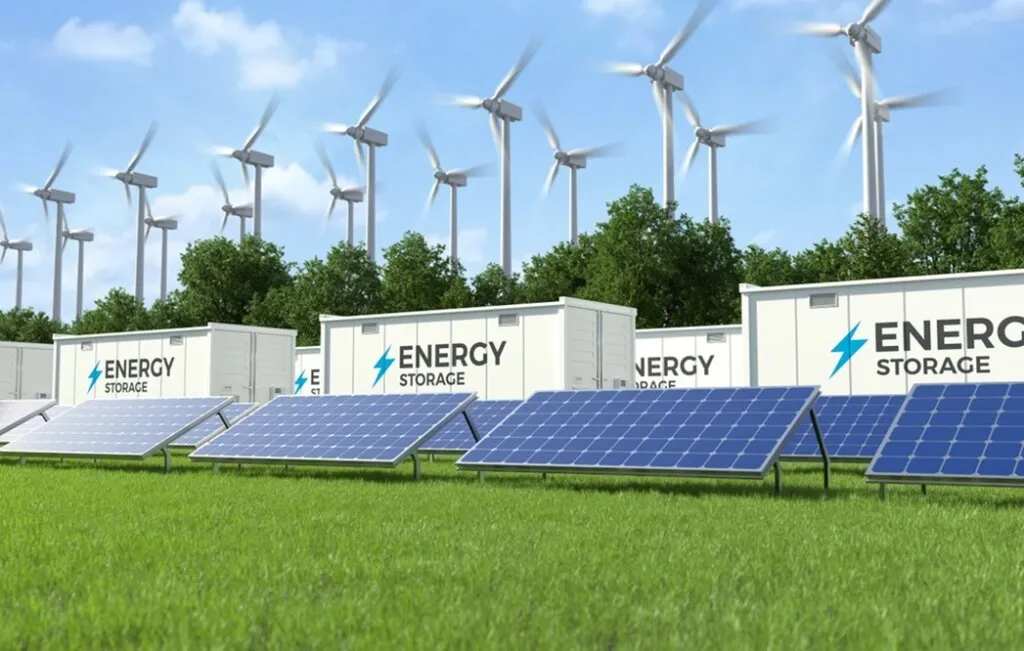
Large battery installations are being paired with renewable energy projects to manage fluctuations. Excess solar during the day gets stored and released at night. Wind energy gets buffered instead of wasted.
Researchers are studying how these systems behave under real-world conditions. Heat. Degradation. Unexpected demand spikes.
The data coming back is shaping next-generation designs. Better thermal management. Smarter control software. New materials that age more gracefully.
It’s a feedback loop between deployment and research, and it’s accelerating.
Energy density isn’t the only metric anymore
For a long time, battery research chased one goal above all else. Higher energy density.
That’s still important, especially for electric vehicles and portable devices. But other factors are now sharing the spotlight.
Cycle life. Safety. Cost stability. Environmental impact.
Some new battery chemistries sacrifice energy density in exchange for durability and safety. For grid storage, that trade-off often makes sense.
A battery that lasts 20 years and never catches fire can be more valuable than one that packs slightly more power into a smaller space.
That shift in priorities is influencing how research funding gets allocated.
Recycling and sustainability are finally baked in
Battery recycling used to be an afterthought. Something to figure out later.
Later has arrived.
As battery deployment scales, so does concern about waste and resource extraction. Researchers are now designing batteries with end-of-life recovery in mind. Easier disassembly. Fewer toxic components. Higher recovery rates for critical materials.
This isn’t just an environmental story. It’s an economic one.
Recycling reduces dependence on volatile supply chains and makes long-term storage deployment more predictable.
Early signs suggest this approach is gaining traction with policymakers and industry alike.
What this means for future research directions
Better energy storage doesn’t just support clean power. It shapes research agendas.
Fields like materials science, chemistry, and physics are becoming more intertwined with energy research. Computational modeling of battery behavior is improving. AI tools are being used to explore new material combinations faster than traditional lab work alone.
At the same time, researchers are becoming more realistic.
Not every breakthrough will scale. Not every promising lab result will survive manufacturing. Some technologies will stall.
That honesty is healthy.
It allows resources to flow toward approaches that balance performance, cost, and practicality.
Challenges are still very real
Despite the progress, energy storage remains hard.
Manufacturing at scale is expensive. Supply chains are fragile. Performance claims often look better in controlled environments than in the field.
There’s also a skills gap. Advanced battery research requires expertise across disciplines, and that talent isn’t evenly distributed globally.
None of these problems are solved. They’re just being addressed more directly than before.
What to expect next
The next few years won’t bring a single battery breakthrough that changes everything overnight.
Instead, expect steady improvement. Better batteries for specific use cases. More storage integrated into grids. Research facilities designed around stable, flexible power.
Energy storage will continue to move from the background to the center of long-term planning.
And as it does, it will quietly unlock research opportunities that were previously limited by something very basic.
Keeping the lights on.