Leaks around Samsung’s Ultra phones tend to arrive early. This year is no different.
With the February 25 launch date now floating around industry circles, details about the Samsung Galaxy S26 Ultra are starting to spill out. Not from one clean source, but from the usual mix of tipsters, supply chain chatter, and half-revealing renders.
Put together, they paint a picture of a phone that looks familiar at first glance, but may change how Samsung defines “Ultra” under the hood.
And yes, a lot of this still needs confirmation. But the direction is becoming clearer.
The design looks steady, maybe deliberately so
If you were hoping for a radical redesign, early signs suggest you should temper expectations.
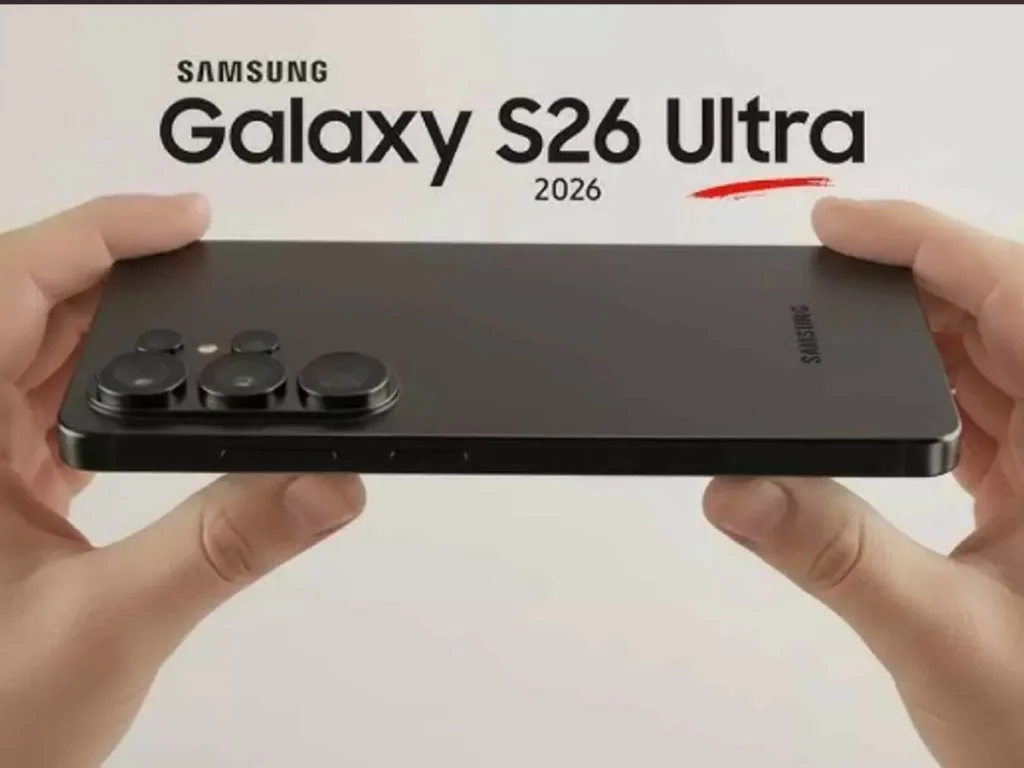
Leaked renders show the S26 Ultra sticking closely to the boxy silhouette Samsung has leaned into since the S22 Ultra. Flat edges. Sharp corners. A big slab of glass that means business.
The most noticeable change appears around the camera housing. Instead of isolated lenses floating on the back, Samsung may be experimenting with a more unified camera module. Nothing dramatic, but enough to signal refinement rather than repetition.
That might sound boring. It’s probably intentional.
Samsung seems comfortable with the Ultra’s identity now. Big screen, serious cameras, S Pen support. Reinventing that every year would be risky.
Camera upgrades are where the noise is loudest
This is where things get interesting.
Multiple leaks point to a new 200MP primary sensor, likely a revised version rather than a full replacement. The focus seems to be improved low-light performance and faster image processing, not just bigger numbers.
There’s also talk of a new periscope telephoto setup, possibly offering cleaner 10x zoom with better stabilization. Samsung already leads in long-range zoom, but early signs suggest it wants to tighten image quality rather than chase extreme ranges.
Ultra-wide cameras may finally get some love too. Leaks hint at higher resolution and better edge detail, something photographers have quietly complained about for years.
None of this is official yet. But the pattern fits. Samsung tends to iterate cameras slowly, then suddenly leap forward when the software catches up.
AI is no longer a feature, it’s the pitch
If the Galaxy S25 series introduced “Galaxy AI” as a concept, the S26 Ultra may be where Samsung fully commits.
Leaks suggest deeper on-device AI features tied directly to photography, note-taking, and real-time translation. Think smarter scene recognition, AI-assisted video editing, and tighter integration between the camera and Samsung’s generative tools.
This part matters more than it sounds.
Samsung does not want AI to feel like a checkbox anymore. The company appears to be pushing toward AI that runs locally, faster, and with less dependence on cloud processing.
That likely means a heavier emphasis on the chipset.
Performance points to a familiar split strategy
Depending on region, the S26 Ultra is expected to ship with either a next-gen Snapdragon chip or Samsung’s own Exynos silicon.
Leaks suggest noticeable gains in AI workloads and sustained performance, rather than raw benchmark numbers. Better thermal management is also being discussed, which Ultra users will appreciate. These phones are often pushed hard.
Battery size is rumored to stay around the 5,000mAh mark, but with efficiency improvements instead of capacity jumps. Charging speeds may inch forward, but don’t expect a dramatic leap.
Samsung tends to move cautiously here.
The display remains Samsung’s quiet flex
No surprises, but still worth mentioning.
The S26 Ultra is expected to feature a 6.8-inch AMOLED panel with adaptive refresh rates up to 120Hz. Leaks mention improved brightness and reduced power draw, especially at lower refresh rates.
Under-display camera tech is not expected this year. Samsung appears to be waiting until quality meets its standards.
Sometimes restraint is the right call.
What’s still unclear
For all the leaks, several big questions remain unanswered.
Pricing is one of them. With rising component costs and AI hardware demands, there’s a real chance the S26 Ultra creeps higher in price. Whether consumers accept that is another story.
Software support is another open topic. Samsung has led Android brands in update commitments recently. Extending that further could be a quiet but meaningful selling point.
And then there’s competition. Apple, Google, and Chinese manufacturers are all pushing their own AI-centric narratives. Samsung needs the S26 Ultra to feel not just powerful, but distinctly useful.
What to realistically expect on Feb 25
If these leaks hold, the Galaxy S26 Ultra will not shock anyone on stage.
Instead, it will likely reassure Samsung’s core audience that the Ultra line is still the place for no-compromise Android hardware. Better cameras. Smarter AI. Polished performance.
Incremental on the surface, more ambitious underneath.
That’s been Samsung’s playbook lately. And for a phone aimed at power users, it might be exactly what they’re looking for.
The real test will come after launch, when people start using those AI features day after day. That’s when hype fades and habits form.