Sustainable packaging has been promised for years. Better materials. Smarter logistics. Less plastic quietly slipping into landfills.
What’s been missing is coordination. Packaging decisions are still fragmented across suppliers, factories, and retailers, often optimized for cost or speed rather than environmental impact.
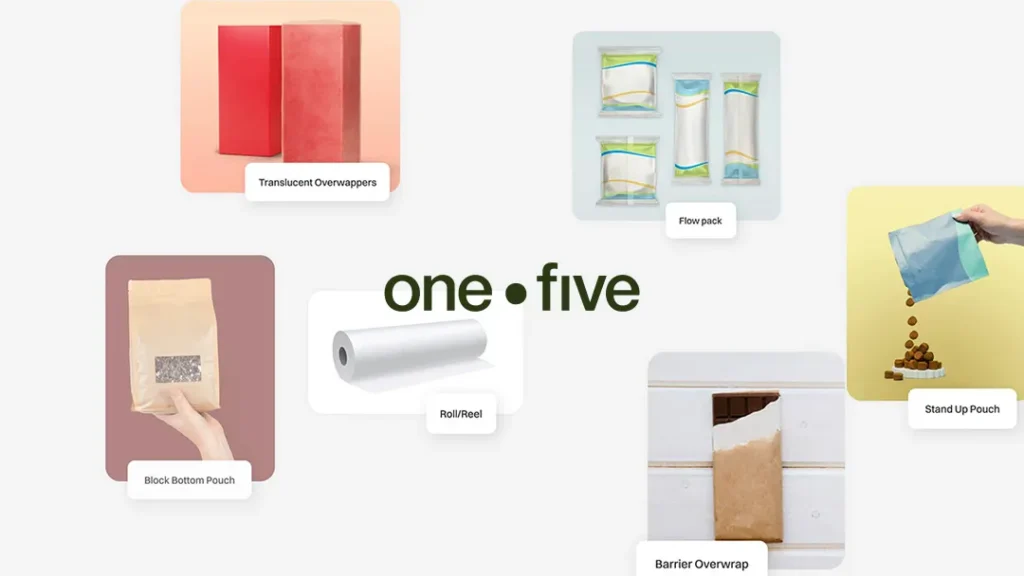
This week, one.five announced a €14 million Series A round aimed at fixing that gap with software, not slogans. The startup is using AI to help companies design, source, and manage packaging in ways that reduce waste without breaking operations.
It’s not flashy. And that’s probably why investors are paying attention.
Packaging is a bigger problem than it looks
Packaging is everywhere, which makes it easy to ignore.
But it’s also one of the most stubborn sustainability challenges. Materials vary by region. Recycling rules change city by city. Supply chains are global and messy. A “sustainable” package in one market can be landfill-bound in another.
Most companies know this. They just don’t have great tools to deal with it.
That’s where one.five is stepping in.
What one.five is actually building
At its core, one.five offers an AI-driven platform that helps businesses make better packaging decisions across the entire lifecycle.
Instead of treating packaging as a static design choice, the platform analyzes data around materials, suppliers, logistics, emissions, and regulatory constraints. It then suggests alternatives that balance sustainability goals with cost and feasibility.
This isn’t about swapping plastic for paper everywhere. It’s about context.
A lighter package that reduces shipping emissions may be better than a heavier recyclable one. A regional supplier may outperform a “greener” material shipped halfway around the world.
That trade-off analysis is where AI earns its keep.
Why the timing works
Sustainability teams are under pressure right now.
Regulations are tightening across Europe. Reporting requirements are getting stricter. Customers are asking harder questions. At the same time, margins are thin and supply chains are still fragile.
Manual spreadsheets and one-off audits don’t scale in that environment.
Early signs suggest companies want tools that integrate sustainability into everyday decisions rather than treating it as a separate initiative. Packaging, because it touches procurement, logistics, and branding, is an obvious place to start.
This part matters more than it sounds.
€14 million says this is about execution, not experimentation
A €14 million Series A won’t turn one.five into a giant overnight. But it does signal confidence that the model works well enough to scale.
Investors backing this round appear to be betting on something specific. That sustainability software moves from dashboards to operational systems. From reporting what happened to shaping what happens next.
AI makes that transition possible by handling complexity that humans can’t manage at scale.
But only if it’s embedded deeply enough into workflows.
Sustainable AI, not AI for its own sake
There’s been plenty of skepticism around “AI for sustainability” claims. Some feel more like marketing than substance.
one.five’s approach seems intentionally practical.
The AI isn’t positioned as a decision-maker. It’s a decision-support layer that surfaces options, highlights trade-offs, and adapts as conditions change. Humans still choose. The system helps them choose better.
That balance is important. Over-automation in sustainability can backfire if it ignores real-world constraints.
The packaging industry is ready, cautiously
Packaging suppliers and brands are not known for rapid change.
But they are pragmatic.
If a tool can reduce waste, cut costs, and simplify compliance, adoption follows. Slowly at first. Then more broadly.
What makes one.five’s pitch compelling is that it doesn’t ask companies to redesign everything. It works within existing supply chains, nudging decisions rather than forcing transformations.
That’s often how change actually happens.
Challenges still ahead
This is not an easy market.
Packaging data is fragmented. Supplier transparency varies. Sustainability metrics can be inconsistent or incomplete. AI models need constant updating as materials, regulations, and prices shift.
There’s also the human factor. Packaging decisions often involve marketing, procurement, and operations teams with competing priorities. Aligning those interests is as much an organizational challenge as a technical one.
Money helps, but it doesn’t solve all of that.
What to expect next
With fresh funding, one.five is likely to expand its platform capabilities and customer base, especially among European manufacturers and consumer goods companies facing regulatory pressure.
You’ll probably see deeper integrations with procurement systems, more granular emissions modeling, and expanded supplier intelligence. Not dramatic announcements. Incremental improvements that make the product harder to replace.
If the approach works, it could quietly reshape how packaging decisions get made.
Not by banning materials or preaching sustainability.
But by making the better choice easier to see.
And in an industry built on small margins and massive volumes, that may be enough to move the needle.