Two stories this week, unfolding on opposite sides of the world, say a lot about where technology is heading next.
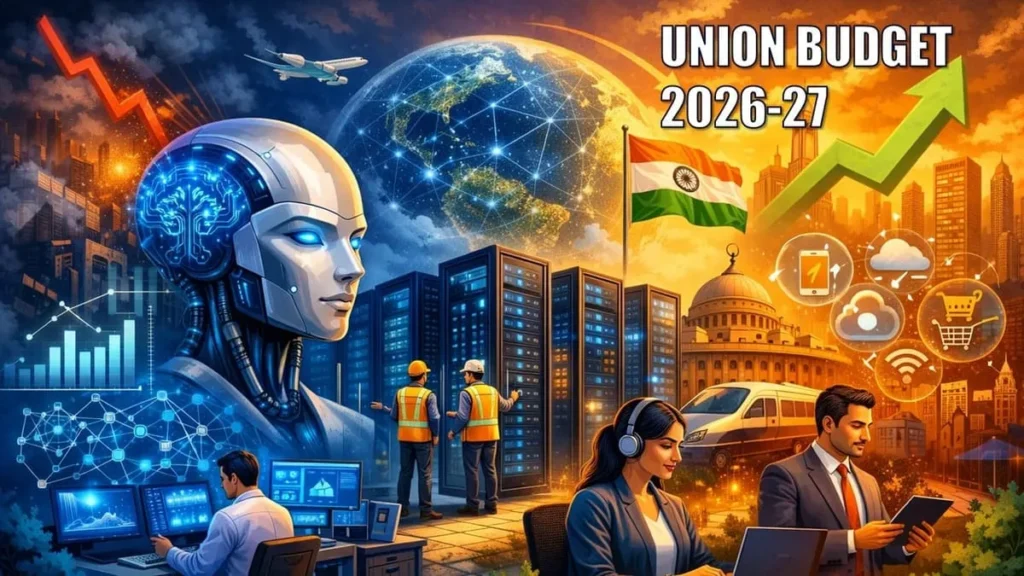
In New Delhi, India’s 2026 Union Budget put artificial intelligence firmly at the center of its economic strategy. In Las Vegas, CES 2026 attendees were lining up to try biometric systems that promise to secure devices using brainwaves instead of fingerprints or faces.
Different contexts. Different ambitions.
But the same underlying question sits beneath both. How fast can we trust technology to move from novelty to infrastructure?
India’s budget treats AI less like hype and more like plumbing
India has talked about AI before. Policy papers, pilot programs, task forces. This time, the language feels more concrete.
The 2026 Budget frames AI as a capability the country must build domestically if it wants to compete globally. Not as a future aspiration, but as something that needs funding, hardware, talent, and coordination now.
There’s money earmarked for national compute infrastructure, research hubs, and partnerships between universities and industry. The emphasis is on applied AI, tools that can actually be deployed in healthcare, agriculture, manufacturing, and public services.
That’s where things get interesting.
India isn’t positioning itself as the home of the biggest AI models. It’s aiming to become a place where AI gets used at scale, in messy real-world conditions that other countries rarely deal with.
Compute access finally gets addressed
One of the quiet but important signals in the budget is the focus on compute.
Indian researchers and startups have long complained that access to high-end computing is a bottleneck. The talent exists. The ideas exist. The hardware often doesn’t.
The budget proposes shared national AI compute facilities that universities and startups can tap into. If executed well, this could level the playing field for smaller teams that currently rely on expensive foreign cloud services.
Early signs suggest this is meant to be long-term infrastructure, not a one-off scheme. That matters more than it sounds.
CES 2026 shows how personal tech is getting more intimate
While policymakers were talking strategy, CES 2026 was busy showing what tomorrow’s consumer tech might look like.
One of the most talked-about areas wasn’t foldable screens or smarter assistants. It was security.
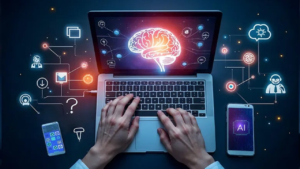
Several companies demoed brainwave-based authentication systems that claim to identify users based on neural signals captured through lightweight headsets or earbuds. The pitch is simple. Your brain patterns are harder to steal than your password or fingerprint.
It sounds futuristic. It also feels a little unsettling.
Unlike fingerprints or faces, brain signals are deeply personal and still poorly understood. Even the companies showing off these systems admit the technology is early-stage.
Still, the attention was real. Long demo lines. Serious interest from device makers. Quiet conversations about future integrations.
Why biometric security keeps escalating
Passwords are broken. Everyone agrees on that.
Biometrics were supposed to fix the problem, but they brought their own issues. Faces can be spoofed. Fingerprints can be copied. Voice prints can be mimicked.
Brainwave authentication is the next step in that escalation.
The idea is that neural patterns are dynamic. They change subtly based on mental state, making them harder to replicate. Some systems combine brain signals with behavioral cues, adding another layer of verification.
This part matters more than it sounds.
As devices handle more sensitive data, especially AI-driven systems that know a lot about us, security needs to evolve alongside capability.
The trust gap both stories reveal
There’s a common thread here, and it’s trust.
India’s AI push will only succeed if citizens trust how AI is used in governance, healthcare, and public services. Transparency, fairness, and accountability will matter as much as funding.
Brainwave security faces a similar challenge. People may accept face scans and fingerprints. Brain data feels different. More intimate. More invasive.
At CES, even enthusiasts admitted they’d want strict safeguards before using such systems daily. Where is the data stored? Who can access it? Can it be reused for other purposes?
These are not edge questions anymore.
Global competition meets personal technology
India’s AI ambitions are clearly shaped by global competition. The U.S. and China dominate AI platforms and standards. India wants to avoid being locked into systems built elsewhere.
At the same time, consumer tech is moving toward deeper integration with the human body. Wearables. Biometrics. Neural interfaces.
Put those together, and you start to see the shape of the next decade. AI systems embedded everywhere, secured by technologies that blur the line between device and user.
That future promises efficiency. It also demands restraint.
What to realistically expect next
India’s AI investments won’t produce overnight results. The next few years will likely bring incremental progress. New research centers. Startups testing applied AI tools. Government departments experimenting, sometimes clumsily, with automation.
Some initiatives will work. Others won’t.
On the biometric front, brainwave authentication is unlikely to replace existing methods anytime soon. It will start in niche use cases. High-security environments. Experimental consumer devices. Maybe enterprise hardware.
Expect more pilots than rollouts.
What ties these stories together is timing. Governments are planning for an AI-driven future at the same moment consumer tech is probing how deeply it can integrate with human biology.
The technology is moving fast. The rules, norms, and trust structures are still catching up.
And that gap may end up shaping what succeeds more than any technical breakthrough.