This isn’t the kind of math story that starts with a dramatic breakthrough announcement.
It began quietly, in research labs where engineers and neuroscientists have been borrowing ideas from the human brain and applying them to computing hardware. The goal was never to beat traditional supercomputers at their own game. It was to see if a different approach to computation could handle problems that standard machines struggle with.
Now, early results suggest these brain-inspired, or neuromorphic, computers are doing something unexpected. They’re excelling at certain types of complex math problems. Not faster in every case. Not universally better. But different enough to raise eyebrows.
That difference is worth paying attention to.
What “brain-inspired” actually means here
Neuromorphic computers don’t process information the way normal computers do.
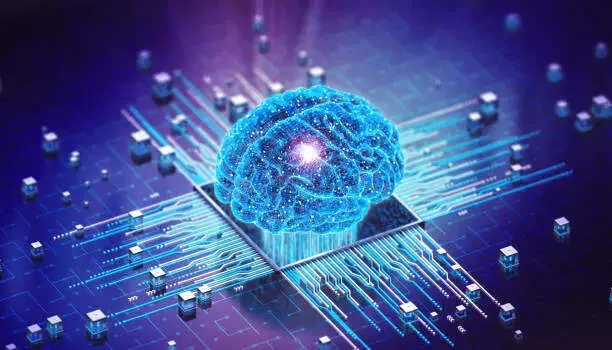
Instead of rigid instruction sequences and clock cycles, they use networks of artificial neurons that fire signals when certain thresholds are reached. Computation happens through patterns of activity, not step-by-step commands.
If that sounds fuzzy, that’s because it is. And that’s kind of the point.
The human brain isn’t precise in the way a calculator is. It’s noisy, adaptive, and massively parallel. Neuromorphic systems try to capture some of that behavior in silicon.
For years, this approach was mostly associated with pattern recognition. Image classification. Sensory processing. Things that look a lot like perception.
Math wasn’t supposed to be their strength.
The kinds of math these systems handle well
The surprise comes from a specific class of problems.
Neuromorphic systems appear particularly good at solving optimization and constraint-based math. Problems where many variables interact, and the solution isn’t a single correct number but a best possible outcome.
Think complex systems with competing forces. Scheduling problems. Network flows. Certain types of differential equations.
Traditional computers can solve these problems, but they often do so by brute force. That works, but it can be slow and energy-intensive.
Brain-inspired computers approach the same problems differently. They let solutions emerge through dynamic interactions in the network.
That’s where things get interesting.
Why this approach can outperform conventional machines
The advantage isn’t raw speed. It’s efficiency.
Neuromorphic systems process many possibilities at once. Instead of checking one path after another, they explore a whole landscape simultaneously. Good solutions stabilize. Bad ones fade out.
This behavior mirrors how physical systems settle into low-energy states. And in some mathematical problems, that’s exactly what you want.
Early signs suggest these systems can reach acceptable solutions faster while using far less power. In an era where energy costs are becoming a limiting factor for computing, that matters.
A lot.
The hardware is still experimental
It’s important not to oversell this.
Neuromorphic hardware is still niche. Prototypes exist. Specialized chips are being tested. But these systems are not replacing CPUs or GPUs anytime soon.
Programming them is also hard. Very hard.
You don’t write code in the usual sense. You design networks. You tune parameters. You let the system learn and adapt.
That’s a different skill set. And it’s one reason adoption has been slow.
Still, progress is happening. Slowly. Unevenly. But steadily.
Where researchers see practical value
Most researchers aren’t pitching neuromorphic computers as general-purpose machines. They see them as accelerators for specific tasks.
Math-heavy fields that involve uncertainty and massive interactions are obvious candidates.
Climate modeling. Financial risk analysis. Materials discovery. Even parts of machine learning that rely on optimization rather than prediction.
In these areas, finding a good solution quickly can be more valuable than finding a perfect solution eventually.
This part matters more than it sounds.
Real-world systems rarely have clean, exact answers.
What makes this different from AI hype
It’s tempting to lump brain-inspired computing into the broader AI narrative. But that misses something important.
This isn’t about smarter algorithms or larger models. It’s about a fundamentally different way of representing and manipulating information.
Neuromorphic systems don’t “understand” math. They embody it in their dynamics.
That distinction keeps expectations grounded. These machines won’t suddenly become creative mathematicians. They will, however, become useful tools for specific, messy problems.
Challenges that still stand in the way
Several hurdles remain.
Consistency is one. Neuromorphic systems can produce slightly different results each run. That’s acceptable in some contexts. In others, it’s a problem.
Integration is another. Most existing software stacks aren’t built to work with this kind of hardware. Bridging that gap will take time.
And then there’s trust. Engineers like systems they can reason about. Emergent behavior is powerful, but it’s also harder to predict.
These are not small issues.
What to expect in the near future
Over the next few years, expect more hybrid systems.
Traditional computers handling control and precision. Neuromorphic chips handling optimization and exploration. Each doing what they’re good at.
You’re unlikely to see brain-inspired computers in consumer devices anytime soon. But you may see them quietly embedded in research infrastructure and industrial systems.
That’s often how new computing paradigms begin.
They don’t replace everything. They find a niche. And then that niche grows.
For now, the takeaway is simple.
Thinking like a brain, even imperfectly, may turn out to be a surprisingly effective way to solve math problems that don’t like rigid rules.
And that opens up possibilities worth watching.