For years, the global tech conversation has followed a familiar rhythm.
The U.S. leads in innovation. Europe regulates. China scales fast. Everyone repeats it, often without checking whether it still holds.
Lately, though, the data is getting harder to ignore.
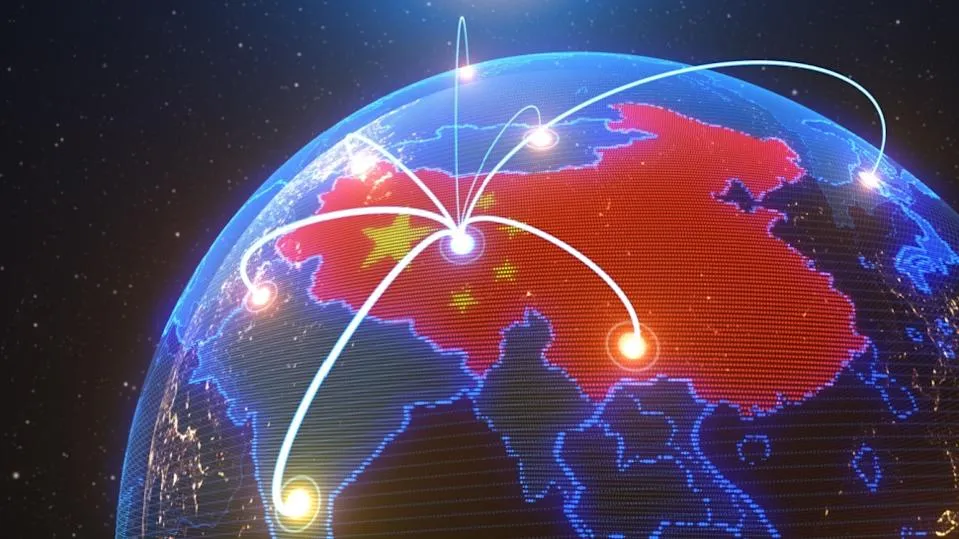
Across a growing list of critical technologies, China now leads the world in research output. Not by a little. In some areas, by a lot. And this time, it’s not just about volume. Quality and influence are starting to follow.
That shift didn’t happen overnight. But it’s becoming visible now.
What “leading in research” actually means here
This isn’t about who makes the best gadgets or which country has the flashiest startups.
The claim rests on research metrics. Peer-reviewed papers. Highly cited studies. Breakthrough work in foundational technologies that shape everything built on top of them.
Independent analyses tracking global research trends show China producing the majority of top-tier publications in areas like advanced materials, energy storage, quantum technologies, AI, and biotechnology.
That matters because research leadership tends to show up years before commercial dominance.
By the time products hit the market, the groundwork has already been laid.
The scale advantage is real, and it compounds
China’s research push benefits from scale in a way few countries can match.
Massive universities. Large public funding programs. Tight coordination between government priorities and academic work. When a field is identified as strategic, resources follow quickly.
This doesn’t guarantee breakthroughs. But it increases the odds.
More labs working on similar problems means more experiments, more failures, and eventually more successes. That volume creates momentum.
Early signs suggest this momentum is now translating into global influence, with Chinese research increasingly shaping how problems are defined, not just solved.
It’s not just applied tech anymore
For a long time, critics argued China excelled at applied research but lagged in basic science.
That line is getting harder to defend.
In fields like physics, chemistry, and materials science, Chinese researchers are publishing foundational work that others build on. Not incremental tweaks. Core contributions.
That’s where things get interesting.
Basic research is slower. Harder to monetize. Less politically flashy. Countries that invest here are usually thinking long-term.
China appears to be doing exactly that.
Where the U.S. and others are starting to worry
In the U.S., policymakers and researchers are paying closer attention.
The concern isn’t just about competition. It’s about dependency. If future technologies are shaped primarily by research ecosystems outside your influence, you lose leverage. Standards. Supply chains. Talent pipelines.
This isn’t hypothetical.
We’ve already seen how leadership in areas like battery chemistry and solar manufacturing can reshape entire industries. Research leadership tends to come first.
Europe faces similar challenges, though its response has been more fragmented. Funding exists. Coordination is harder.
Talent flow is part of the story
Another factor often overlooked is talent retention.
China produces a large number of STEM graduates every year. Increasingly, top researchers are staying. Or returning after studying abroad.
This wasn’t always the case.
Improved research infrastructure, competitive funding, and clearer career paths are making domestic institutions more attractive. That shift compounds over time.
When experienced researchers mentor new ones inside the same system, knowledge stays local.
That’s a powerful advantage.
Not all fields look the same
It’s worth being precise here.
China does not dominate every technology. Software ecosystems, some areas of semiconductor design, and certain biomedical fields remain more balanced or led elsewhere.
But across a broad swath of what governments consider “critical technologies,” the trend line points in one direction.
Energy. Materials. Manufacturing processes. AI applications tied to physical systems.
These are not niche areas. They underpin everything from defense to healthcare to climate policy.
Collaboration hasn’t disappeared, but it’s changing
Despite rising geopolitical tensions, scientific collaboration continues.
Chinese researchers still co-author papers with peers in the U.S., Europe, and elsewhere. Science remains more open than politics.
But collaboration patterns are shifting. More high-impact work now happens entirely within China’s research ecosystem.
That reduces informal knowledge sharing. It also changes who sets the agenda.
Science, like everything else, reflects power dynamics.
What this means going forward
This isn’t a story about winners and losers. Not yet.
Research leadership doesn’t automatically translate into economic or political dominance. Many factors intervene. Commercialization. Regulation. Public trust.
But it does shape what’s possible.
Countries that want to compete will need to invest consistently. Not just in flashy programs, but in slow, unglamorous research infrastructure. Funding stability. Education. Openness to risk.
That’s easier said than done.
China’s rise in research leadership didn’t come from one policy or one year. It came from decades of sustained focus.
Whether others respond with similar patience remains to be seen.
What’s clear is that the old assumptions no longer fit reality.
And pretending otherwise won’t make the data change.