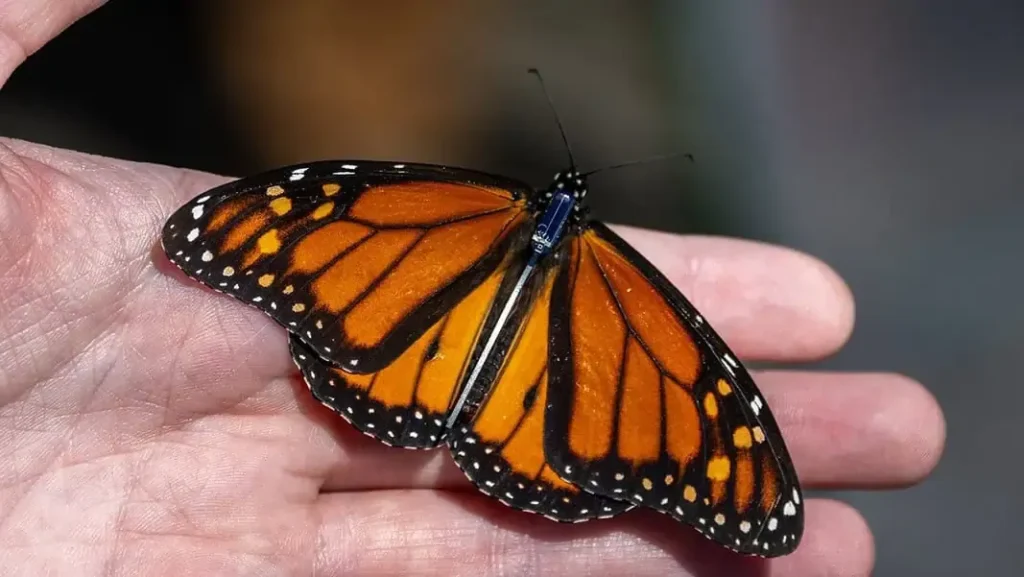
For decades, monarch butterfly migration has been one of those natural phenomena everyone talks about but few people truly understand.
We know the broad story. Monarchs travel thousands of kilometers from North America to central Mexico and back again. Multiple generations involved. No single butterfly completes the full round trip.
It’s amazing. It’s also frustratingly hard to study.
The butterflies are small. Fragile. And very good at disappearing.
Now, scientists say they’re getting closer to tracking monarch migrations in real time, thanks to a new mix of lightweight tracking technology, environmental data, and clever data analysis. It’s not perfect yet, but it’s a meaningful step forward.
And it could change how we protect a species that’s been quietly struggling.
The old problem with tracking something so light
Traditional wildlife tracking tools were never designed for insects.
GPS trackers are too heavy. Radio collars are obviously out of the question. Even tiny tags can interfere with flight or survival. For a long time, researchers had to rely on tagging programs where volunteers would mark butterflies and hope someone else spotted them later.
That method taught us some basics. Routes. General timing. Rough destinations.
But it left huge gaps.
Scientists couldn’t see how monarchs reacted to weather in real time. Or how habitat loss altered their paths. Or why some butterflies never made it to their wintering grounds at all.
Those missing details matter more than they sound.
What’s different about the new approach
The latest tracking efforts combine ultra-lightweight sensors, automated radio telemetry networks, and environmental modeling. Instead of following individual butterflies every second, researchers track movement patterns across landscapes.
Some monarchs are fitted with tiny tags that interact with sensor towers spread across migration corridors. When tagged butterflies pass nearby, their presence is recorded without needing satellites or heavy batteries.
Other projects pair tagging data with wind patterns, temperature shifts, and vegetation maps. This helps scientists infer where monarchs are likely going, even when they aren’t directly detected.
It’s less like following a single butterfly with a camera and more like watching traffic flow from above.
That shift is important.
Early findings are already reshaping assumptions
Even in early stages, the data is challenging some long-held beliefs.
For one, migration routes appear more flexible than previously thought. Monarchs don’t always follow the same narrow paths year after year. They adjust based on weather, available milkweed, and changes in the landscape.
That flexibility sounds positive. But it also suggests monarchs are being pushed into less optimal routes as familiar habitats disappear.
Researchers are also seeing more stopovers than expected. Monarchs pause frequently to rest and feed, which makes them especially vulnerable to habitat loss along the way.
This part matters more than it sounds.
Protecting wintering sites alone isn’t enough if the journey itself becomes impossible.
Why this technology arrives at a critical moment
Monarch populations have been declining for years.
Habitat destruction, pesticide use, climate change, and loss of milkweed have all played a role. Conservation groups have raised alarms, but policymakers often want clearer data before taking action.
Migration tracking provides something closer to hard evidence.
If scientists can show exactly where monarchs struggle, where they detour, and where they fail to survive, conservation efforts can be more targeted. Instead of broad recommendations, land managers get specific guidance.
Protect this corridor. Restore plants here. Reduce pesticide use in this region during these months.
That kind of precision has been missing.
Limits still exist, and researchers admit it
This is not a perfect system.
Tagging still reaches only a small fraction of the population. Sensors are unevenly distributed. Some regions remain data blind spots, especially across international borders.
And while tags are lighter than before, scientists remain cautious about how many butterflies can be tagged without unintended consequences.
Early signs suggest the benefits outweigh the risks, but long-term impacts are still being studied.
That honesty is refreshing. And necessary.
The bigger picture goes beyond butterflies
Monarchs are often treated as a symbol. Of migration. Of environmental health. Of things we’re at risk of losing without noticing.
Tracking their movement with modern technology has implications beyond one species.
If scientists can map how insects respond to climate shifts, land use changes, and extreme weather, it opens doors for studying other pollinators. Bees. Moths. Even agricultural pests.
The same tools could help predict ecosystem changes before they become crises.
That’s the quiet potential here.
What comes next
Researchers plan to expand tracking networks and improve tag efficiency over the next few migration seasons. More data. Better models. Fewer assumptions.
Public participation may also evolve. Instead of just spotting butterflies, citizen scientists could help maintain sensors or report habitat conditions.
It’s still early. Some findings may change. Others may complicate things further.
But for the first time, scientists aren’t just guessing where monarchs go after they vanish over the horizon.
They’re starting to follow the journey as it happens.
And once you can see a problem clearly, ignoring it becomes a lot harder.