For a while, the idea of a tri-fold smartphone lived comfortably in the concept zone.
Trade show demos. Patent sketches. Those glossy renders that look impressive but never quite escape the lab. Samsung has been here before. Flexible screens, foldables, rollables. Some shipped. Many didn’t.
But over the past few months, something has shifted.
People in the supply chain are talking more openly. Leaks feel less speculative and more specific. And Samsung itself has stopped dismissing the idea outright. That usually means one thing. The tri-fold is no longer just a “someday” device.
It may actually be coming.
What people mean when they say “tri-fold”
This is not just a bigger Galaxy Fold.
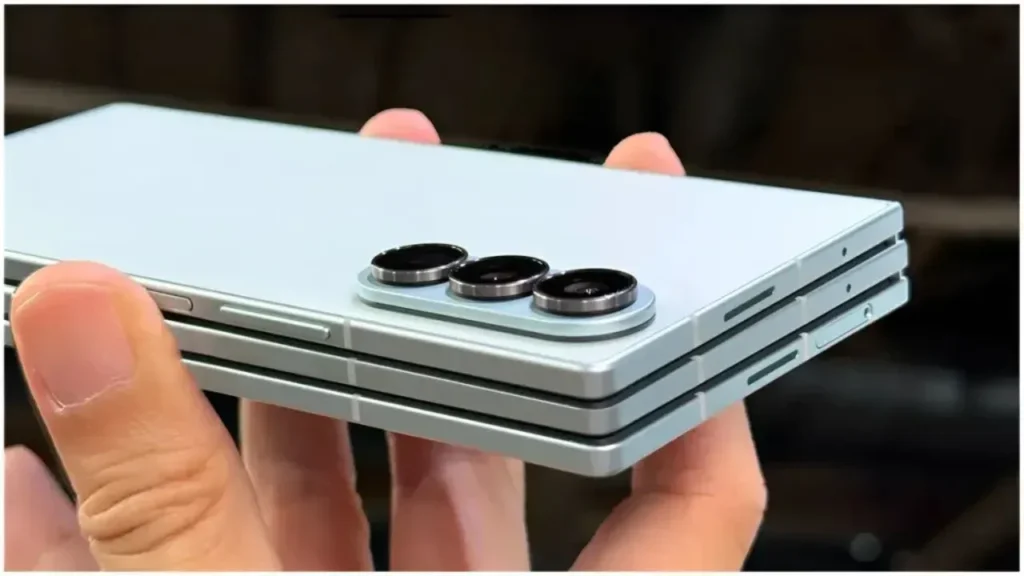
A tri-fold device uses two hinges instead of one, allowing the screen to fold into three sections. In theory, it lets a phone transform into something closer to a small tablet. Or maybe even a mini laptop, depending on how it’s used.
Samsung has shown multiple prototypes over the years. Some fold inward twice. Others fold inward once and outward once. Each design solves one problem and introduces another.
That’s where things get tricky.
More folds mean more stress points. More hinges mean more failure risk. And more screen surface means higher costs. This is not a simple extension of existing foldables.
It’s a different class of product.
Why Samsung is even attempting this
The foldable phone market has hit a weird plateau.
Samsung still leads globally, but growth has slowed. Foldables are no longer shocking. They’re just… accepted. Useful for some. Overkill for many.
At the same time, Chinese manufacturers are catching up fast. Oppo, Huawei, Xiaomi. They’re thinner. Lighter. Sometimes cheaper. Samsung no longer owns the “wow” factor the way it once did.
A tri-fold could reset that narrative.
If Samsung can pull it off first, and pull it off well, it gets another cycle of attention. Another reason to be seen as the company pushing form factors forward.
That matters internally as much as it does publicly.
The engineering problems are not subtle
This part gets glossed over in leaks.
Folding once is hard. Folding twice multiplies everything that can go wrong.
Hinges need to stay smooth. The screen has to avoid deep creases in two places. Durability testing becomes more brutal. And then there’s software.
Android still struggles with large screens. Samsung has done a lot of work with One UI, but tri-fold introduces new layout problems. Apps need to scale not just bigger, but differently depending on which panels are open.
Early signs suggest Samsung has been testing multiple hinge designs internally. That usually means they’re still deciding what compromises they can live with.
Thickness is another issue. A tri-fold phone, when folded, risks becoming a brick. Samsung knows this. Nobody wants a phone that feels like carrying a remote control in their pocket.
Pricing is the elephant in the room
Even optimistic estimates put a tri-fold device well above current Fold pricing.
That likely means north of $2,000. Possibly much more.
Samsung can justify it as a halo product. A device meant to showcase technology rather than sell in massive volumes. But there’s a limit to how many people will tolerate that price, even early adopters.
This is where expectations need to stay realistic.
A first-generation tri-fold will almost certainly be niche. Expensive. Slightly awkward. And probably not something Samsung expects to sell in millions.
That doesn’t make it a failure. It makes it a test.
What Samsung is not saying yet
Officially, Samsung remains careful.
Executives talk about “exploring new form factors” and “listening to consumer needs.” No timelines. No confirmation. Just enough to keep interest alive.
That silence is telling. Samsung usually denies things early when they are not real. Here, it’s doing the opposite. Leaving the door open.
Supply chain chatter suggests limited production runs are being discussed. Not mass rollout. More like a controlled launch, possibly in select markets.
If that’s true, expect something closer to a Galaxy Z Fold SE than a mainstream flagship.
Who this phone is actually for
Not most people.
A tri-fold is aimed at power users, creatives, and people who want their phone to replace other devices. Think note-takers, multitaskers, maybe some business users.
It’s also aimed at developers and partners. Giving them a reason to rethink large-screen app design again.
Samsung has done this before. The original Galaxy Fold was rough, but it pushed the ecosystem forward. Even competitors benefited.
This feels similar.
What happens if it works, and if it doesn’t
If Samsung nails the hardware and keeps reliability reasonable, the tri-fold becomes a statement. Not just about folding phones, but about where mobile computing could go.
If it struggles, quietly or publicly, Samsung can still learn from it. Improve hinges. Refine software. Iterate.
Either way, the industry watches closely.
Because once Samsung commits, others follow. That’s been the pattern.
Right now, the tri-fold sits in that uncomfortable space between ambition and practicality. Too complex to be casual. Too interesting to ignore.
Whether it becomes the next category or another fascinating detour depends on execution. And a bit of patience.
We’ll know soon enough.